
Attire and Turnout
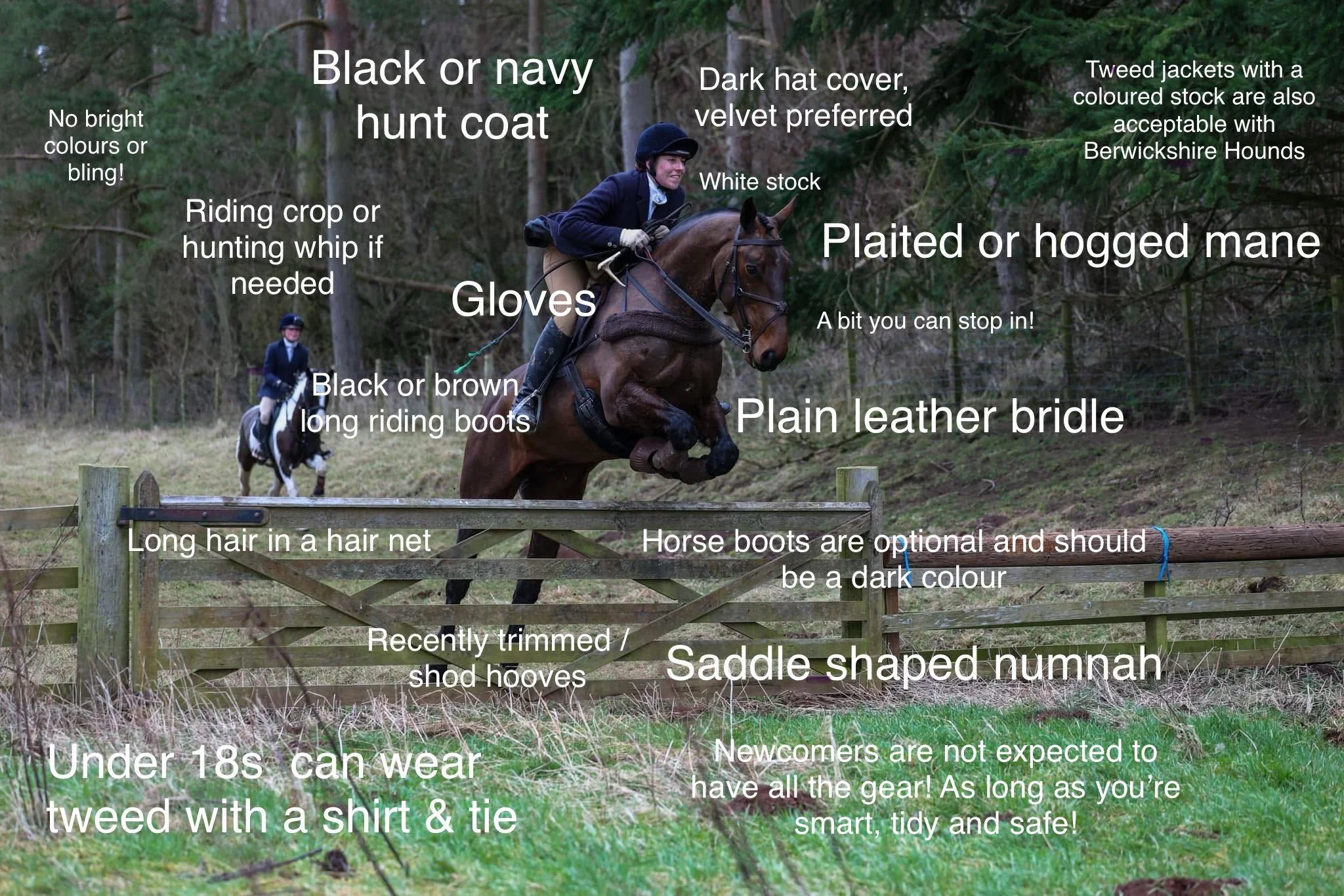
Dress
Hunting attire has evolved to be sensible and comfortable in all weathers, while maintaining tradition. A well-turned out member of the field makes everyone else who makes an effort feel good about the day and more importantly shows respect to our farming hosts.
Newcomers
Newcomers are not expected to have the correct dress, but should make the effort to be as smart as possible. You won’t be judged on attire, we all started out in whatever attire we could put together. Smart, tidy and safe is the key, (just leave the pink bobble hat silk at home please!)
Jewellery
Jewellery of any kind should not be worn as it can cause nasty accidents or worse. If you have long hair, a hairnet should be worn.
Autumn Hunting Attire
For Autumn Hunting “ratcatcher" is the correct attire which consists of a tweed coat, black or brown boots, and a collar and tie.
Attire in the Season Proper
Black coat or tweed coat (or optionally navy for ladies), black boots and a white stock.
Any smart waterproof coat is also acceptable in wet weather.
In the Berwickshire the new livery is green mélange; which full subscribers are invited to wear, alongside Masters and staff.
Buttons
Hunt staff mostly wear five buttons, Masters wear four, and Subscribers wear three buttons. Buttons on black and navy coats should be black and on green coats should be brass.
Every hunt has its own distinguished buttons and the wearing of these is reserved for those who have been awarded their "Hunt Button" by the Masters.
Collars
Most hunts have a distinguishing collar and in the Berwickshire a dark green velvet collar is worn by Masters, former Masters and hunt staff. Having your hunt buttons does not automatically entitle you to wear the collar.
Whips
To carry a hunting whip is traditional but is also practical. It is used as a whip for riding, the handle is useful to catch gates and lightly swung or dangled it can be used to discourage hounds away from your horse’s feet.
Numnah
Numnahs should be dark and follow the shape of the saddle.
Turnout
Good turnout is beneficial for the horse, but also shows respect to the landowners which we cross during the day’s hunting. Horses should be clean, with mane plaited or hogged during the Season Proper. They should be shod or trimmed and hoof oil applied. Boots are permissible if dark, but most do not wear them as they may cause rubs during a day’s hunting.
Other Considerations
If it is your first time hunting, we generally recommend a stronger bit than you normally ride in. There is a lot going on, lots of horse, hounds in cry and varied terrain, all of these can make even a quieter horse stronger!
White, cream or dark gloves are recommended, cold hands and sweaty reins can quickly lead to slipping and loss of control.
If in doubt, muted or dark colours are best. Black, brown and navy won’t go far wrong.