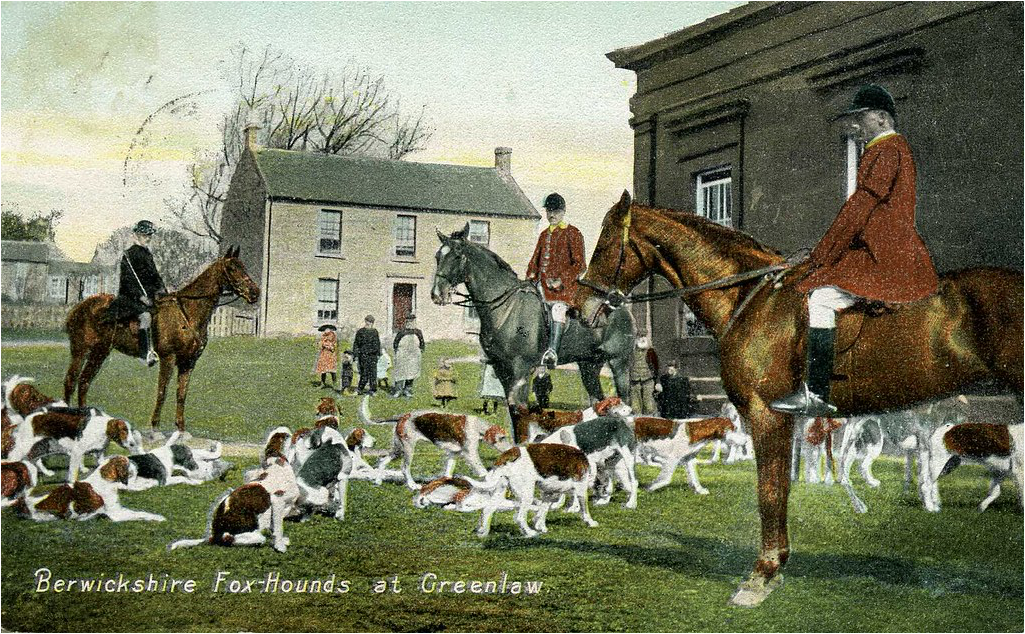
The Berwickshire Hunt has a long history, with organised foxhunting in Berwickshire dating back to the eighteenth century. The Hunt is generally considered to have been formally established in 1787, although hunting had taken place across the county for many years before this.
During the late eighteenth and nineteenth centuries, hunting in Berwickshire developed alongside the agricultural and rural communities of the area. The country hunted by the Berwickshire changed over time, with neighbouring hunts also operating across parts of the Borders. As the Hunt became more established, a more permanent organisation developed, with Masters, professional huntsmen, kennels, hounds and a growing number of subscribers and followers.
Throughout the nineteenth century, hunting became an important part of rural life in Berwickshire. The Hunt developed close relationships with landowners and tenant farmers, while the social side of hunting became increasingly important. Hunt meets, dinners, balls, puppy shows and other events brought together people from across the local community.
By the beginning of the twentieth century, the Berwickshire was an established pack. Sir James Miller of Manderston was one of the prominent Masters during this period, followed after his death in 1906 by Fred Usher. The Hunt continued to develop its reputation for producing and breeding good Foxhounds, while maintaining a strong following among the local farming and sporting community.
The inter-war years saw the Berwickshire continue to play an important role in the life of the local countryside. The Hunt maintained its relationships with farmers and landowners, while the hounds, horses and people involved in hunting became a familiar part of the Berwickshire landscape.
The Second World War and the years that followed brought considerable changes to rural life. Agriculture became increasingly mechanised, the number of people working on farms declined and roads became busier. Despite these changes, the Berwickshire continued to operate as a traditional mounted hunt, adapting to the changing countryside while maintaining its established traditions.